

Power That Lasts.
Why Use Rechargeable Batteries?
From wireless accessories and toys to flashlights and cameras, rechargeable batteries deliver dependable long-lasting power while helping reduce waste and replacement costs. Keep your essential devices running with reliable energy that's ready whenever you are.
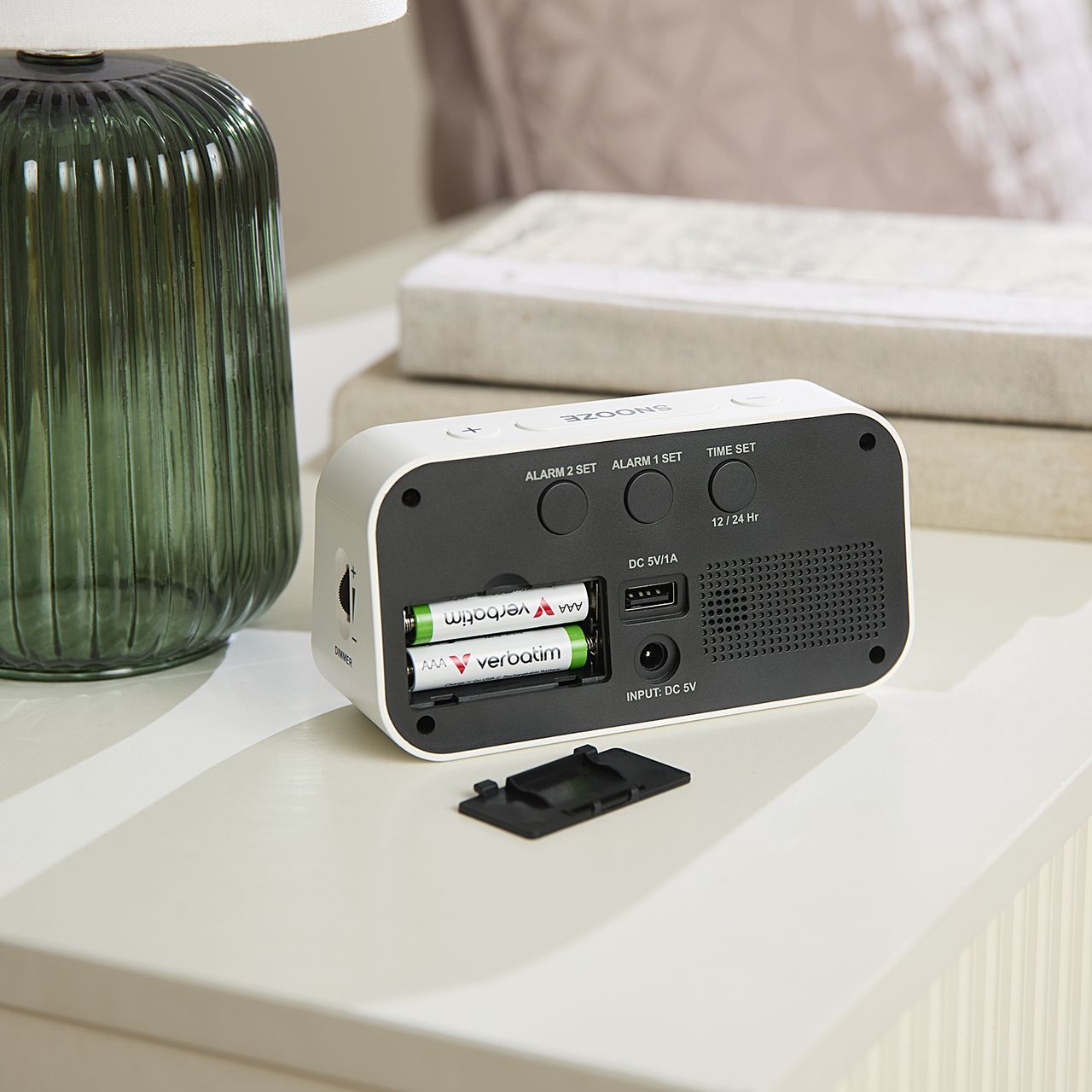
Reliable Power, Every Time
Recharge. Reuse. Repeat.
More Value Over Time
Designed for Any AA/AAA Device: Enjoy seamless device compatibility.
Reusable Power: Designed to be used again and again, reducing the need for single use batteries.
Versatile Compatibility: Ideal for a wide range of devices.
Portable Power: Easy to carry and perfect for travel, work, and everyday use.

Ready for Everyday Life
A More Sustainable Choice
Built for High-Performance Devices
Long-Lasting Performance: Delivers consistent, reliable energy for both every day and high-drain devices.
Eco-Conscious Choice: Helps reduce waste and supports a more sustainable way to power your devices.

Essential for Every Home
Take Power Anywhere
Cost- Effective Solution: Save money over time by recharging instead of constantly replacing batteries.
Reliable, Consistent Output: Engineered for steady performance across multiple charge cycles.
Certified for Safety: UL Certified Logo, Electronically Controlled and Dynamically Optimized, and Advanced, Built-in protection.
What are the key differences between Li-Ion and NiMH rechargeable batteries?
Factor | Lithium-Ion | NiMH | Why it matters |
|---|---|---|---|
Internal cell voltage | Typically ~3.6–3.7V | ~1.2V | Li-ion AA/AAA batteries may need electronics to regulate their output |
Energy density | Higher | Lower | Li-ion can deliver more energy for its size/weight |
Voltage during use | Can remain very steady when electronically regulated | Gradually declines | Can affect device performance and battery indicators |
Charge Retention | Generally low | Higher, although modern low-self-discharge NiMH is much better | Li-ion tends to remain ready after storage |
Charging method | Controlled CC/CV charging | Usually constant-current charging with voltage/temperature termination | Chargers are chemistry-specific |
Electronics | Often includes protection/voltage regulation | Usually simpler cell construction | Li-ion can offer more features but greater complexity |
Calendar aging | Ages even when not being cycled; heat/high charge accelerate degradation | Also, ages, but behavior differs | Storage conditions affect lifespan |
High-drain use | Potentially excellent, but depends heavily on protection/regulation circuitry | Often excellent | Chemistry alone doesn't determine high-current performance |
Cold performance | Performance and especially charging can be affected by very low temperatures | Also affected by cold | Important for outdoor applications |
Safety requirements | Requires careful voltage, current and temperature control | Can overheat/vent, but chemistry behaves differently | Correct charger and handling are important |
Travel considerations | Subject to specific lithium aviation rules | Fewer lithium-specific restrictions | Important for travel-oriented products |
Recycling | Specialized battery recycling | Specialized battery recycling | Neither rechargeable chemistry belongs in curbside recycling |
Specifications
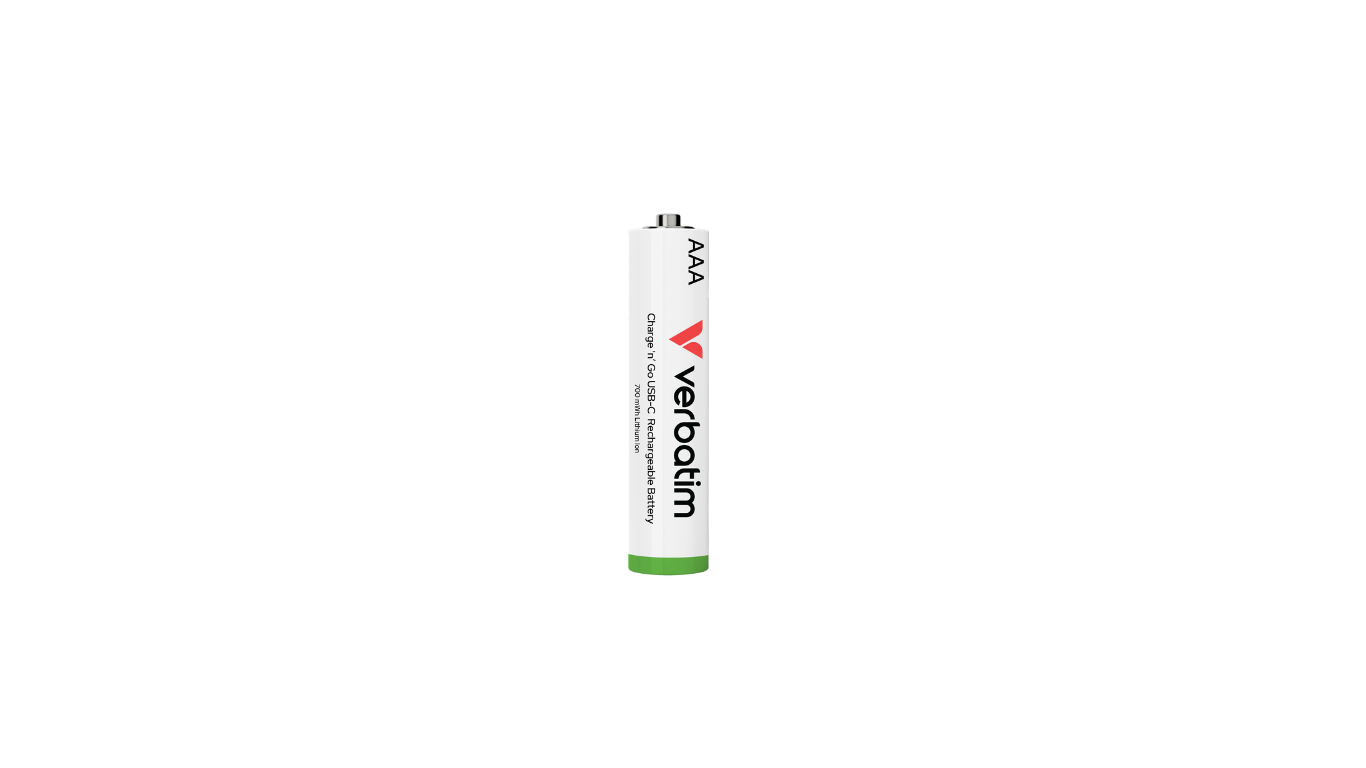
Charge 'n' Go AAA USB-C Rechargeable Batteries
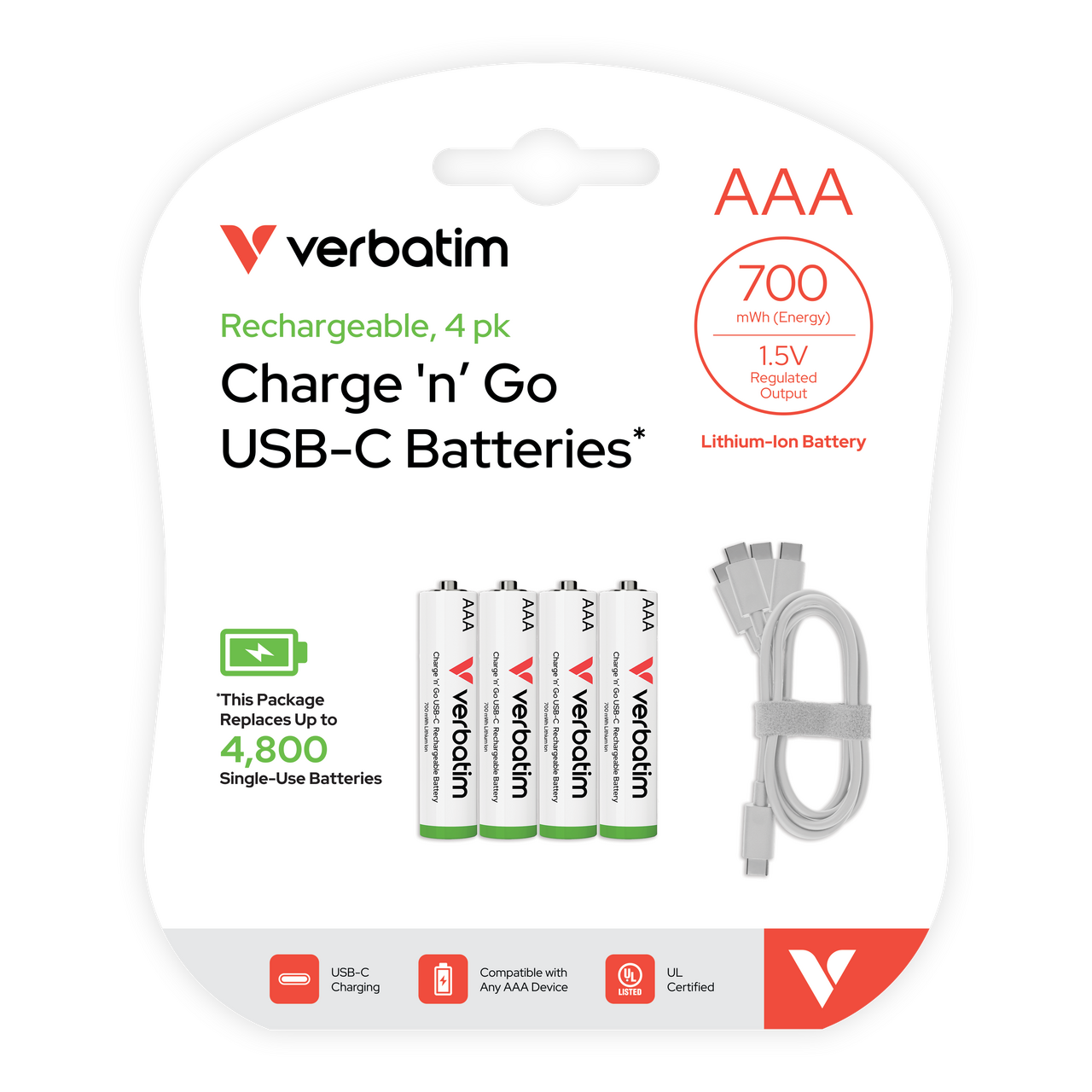
700mWH Energy
Lithium-Ion Chemistry
1.5V Regulated Output
LED Charging Status Indicator
Advanced Safety Protection
Up to 2hrs of charging time
Includes 4-into-1 USB-C Charging Cable
Sustainable Packaging
UL Certified
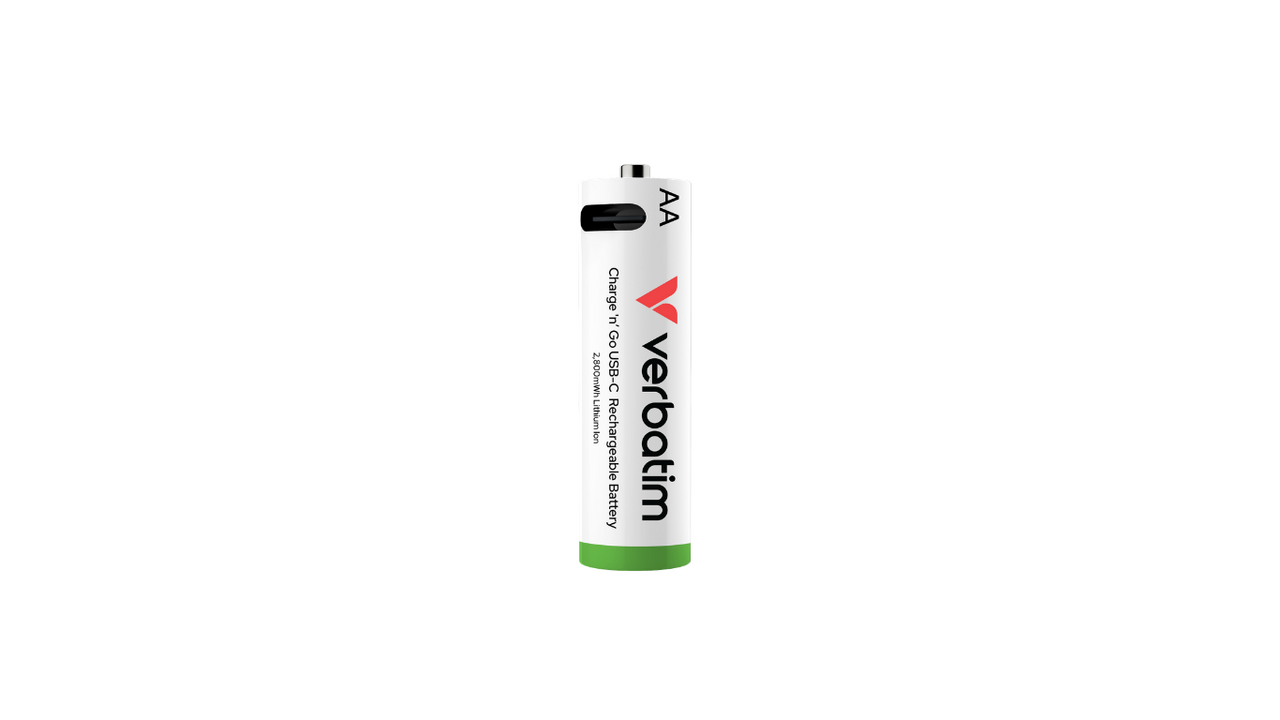
Charge 'n' Go AA USB-C Rechargeable Batteries
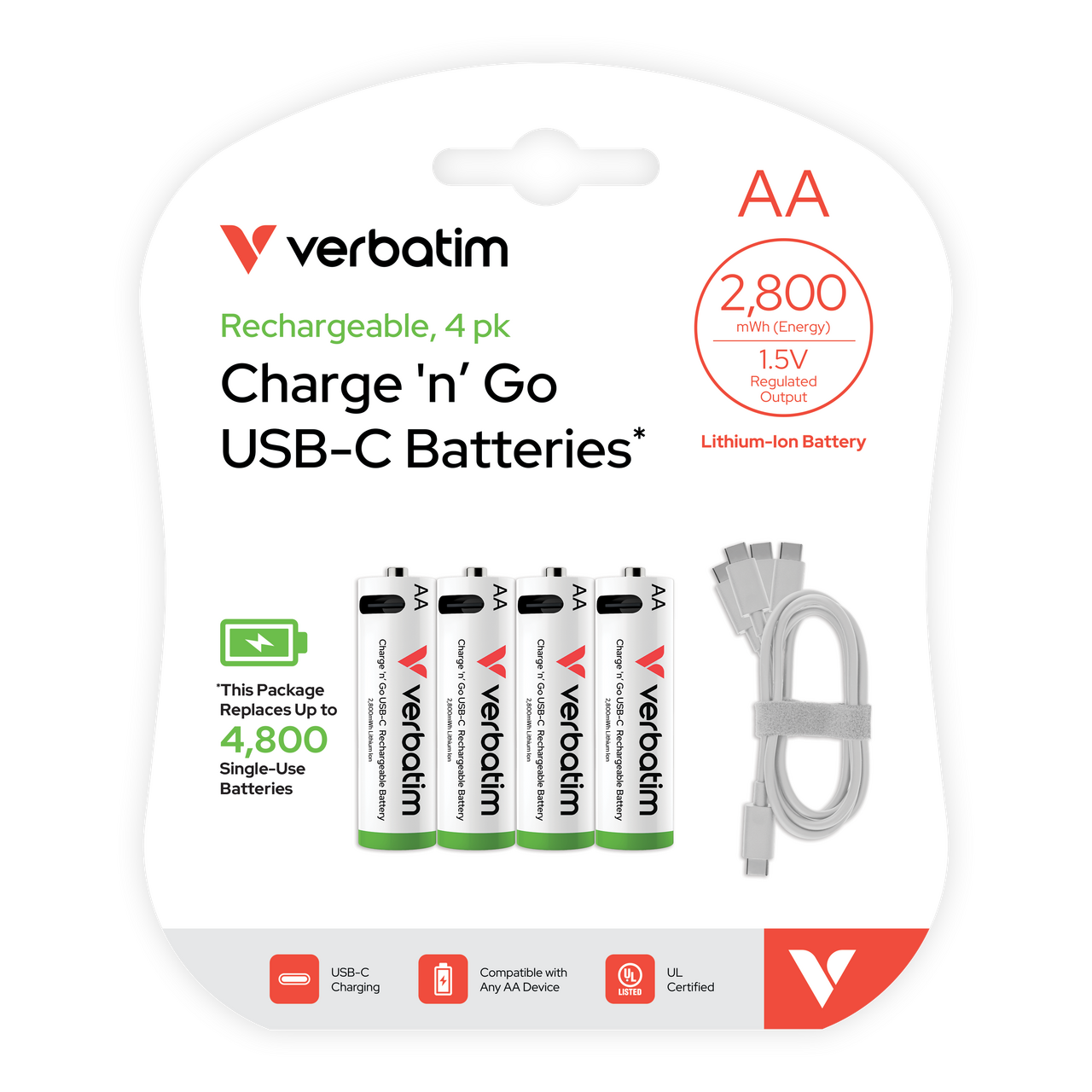
2,800mWH Energy
Lithium-Ion Chemistry
1.5V Regulated Output
LED Charging Status Indicator
Advanced Safety Protection
Up to 3hrs of charging time
Includes 4-into-1 USB-C Charging Cable
Sustainable Packaging
UL Certified
Frequently Asked Questions
What devices can Verbatim USB-C rechargeable batteries be used in?
They can be used safely in any AA / AAA devices.
How are Verbatim USB-C rechargeable batteries different from other traditional rechargeable batteries?
Designed to replace traditional alkaline batteries by featuring modern lithium-ion technology. They have a long, stable shelf life for dependable performance in unplanned situations.
Do Verbatim USB-C rechargeable batteries require a separate, bulky charging cable?
No, simply recharge using the included 4-into-1 charging cable, or any standard USB-C cable.
Why should I use Verbatim USB-C rechargeable batteries instead of traditional alkaline batteries?
Power more devices, reduce more waste, and save more money.
Can Verbatim USB-C rechargeable batteries be used in remote controls?
Yes, both the AA / AAA can be used safely in remote controls.
Can Verbatim USB-C rechargeable batteries be used in game controllers?
Yes, both the AA / AAA can be used safely in game controllers.
Can Verbatim USB-C rechargeable batteries be used in keyboards and mice?
Yes, both the AA / AAA can be used safely in keyboards and mice.